
Innovative and sustainable management
The Noia Fishery Producers Organisation
The Noia Fishery Producers Organisation (OPP-95 Noia) is much more than an association: it is the voice and driving force of those who make their living from the sea in one of the most emblematic fish markets in Galicia. Set up as a non-profit organisation, OPP Noia brings together more than 1,500 sea professionals whose vessels are based in the port of Noia.
Its goal is to ensure that fishing activity is sustainable, profitable and environmentally friendly, always safeguarding the conservation of marine resources and the protection of our ecosystem.
Its functions:
- Coordinate and represent its members in defence of their interests.
- Promote responsible, sustainable and high-quality fishing in line with European regulations and best practices.
- Promote the added value of fishery products, strengthening their prestige in the markets.
- Drive measures for the planning and sustainable management of catches, ensuring the future of the activity for upcoming generations.
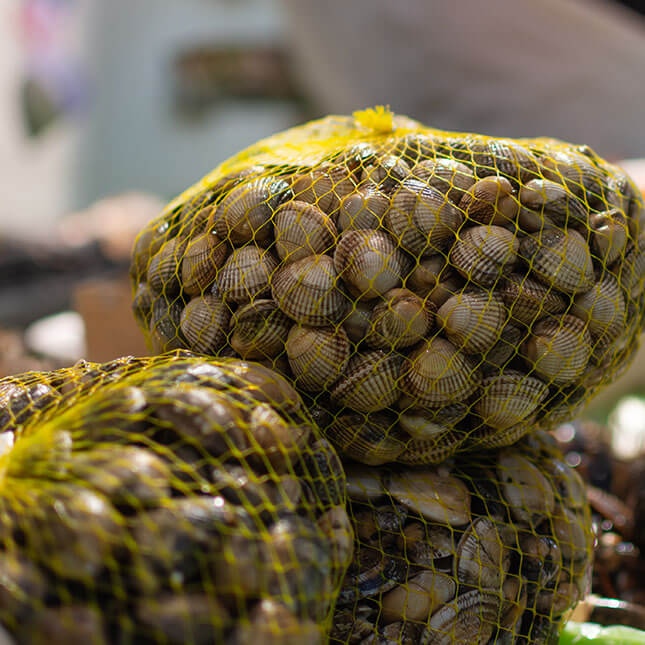
It transforms shellfishing tradition into an innovative management model, ensuring the profitability of the fishing sector, the care of marine resources and the recognition of Noia Cockle as a symbol of quality and sustainability.
With a vision that connects tradition and modernity, OPP Noia is now an engine of economic and social development in the estuary, a benchmark in resource management and a strategic ally for the fishing sector and the whole community.
The shared home of shellfishers
The Guild
The Fishermen’s Guild of San Bartolomé de Noia is the origin of the Noia Fishery Producers Organisation (OPP-95).
This Guild represents around 1,500 sea professionals in Noia, Outes and nearby ports. It manages the fish markets of Testal and O Freixo, ensures transparency in the marketing of shellfish and acts as the collective voice of the sector before the authorities. It also promotes projects related to sustainability, equality and occupational health, reinforcing its role as a modern and committed institution.- Cockle (the main product)
- Soft clam
- Carpet clam
- Japanese clam
- Oyster
THE ESSENCE OF THE ESTUARY WITH A HUMAN FACE
Shellfishing
Shellfishing in Noia
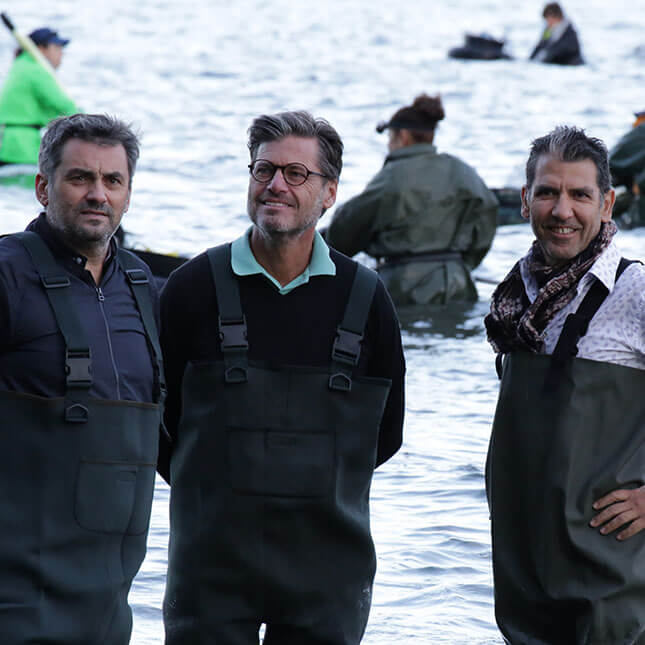
Shellfishing in Noia is much more than an economic activity: it is the essence of the estuary and the driving force that supports thousands of families. Generation after generation, shellfishers have turned this work into a symbol of local identity, keeping alive traditions that combine effort, knowledge of the sea and respect for nature.
Its importance lies not only in the volume and quality of the catches, but also in the artisanal, sustainable and community-based character with which it is carried out.
A unique environment
The success of the Noia cockle is linked to its habitat: the Noia estuary, an estuarine area where fresh and salt water mix, creating one of the most productive ecosystems on the planet, with exceptional conditions for the growth of bivalve molluscs. These conditions make the Noia Cockle a product of distinctive quality and flavour.
Harvesting methods: tradition and sustainability
Management and exploitation plan
OPP-95 Noia and the Fishermen’s Guild of Noia jointly manage the management and exploitation plan, which balances catches and conservation. The season, from September to March, brings together thousands of shellfishers and neighbouring guilds in a model of cooperation and responsible control.
Fair prices and minimum size
Noia cockle is sold exclusively at the fish markets of Testal and O Freixo, through public auctions that ensure transparency and fair prices.
Only specimens of the appropriate size reach the market, reinforcing the commitment to the sustainability of the resource. They are classified into four categories according to size, with different sale prices.
The minimum commercial size for Noia cockle is set at 28 mm, a size above the minimum allowed by regulations.
An activity with a human face
Shellfishing in Noia sustains thousands of families, bringing together tradition, effort and respect for the sea. More than a trade, it is a way of life and a source of collective pride that has made the cockle an icon of Galicia.